
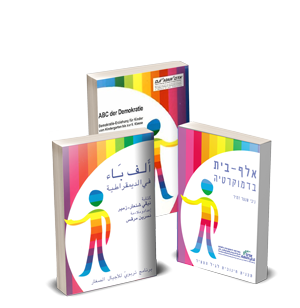
The ABCs of Democracy Educational Program for Grades 1-6 introduces foundational humanistic and democratic concepts and helps children examine their application within the classroom, school community, and beyond. It helps develop children’s social skills based on democratic values. It encourages behavior that respects diversity, needs, and wishes, supports fairness, equality and other rights and responsibilities. Through a range of topics, students explore democratic values and examine how they are expressed in everyday life.
The program is taught experientially through diverse, hands-on activities, grounded in the unique facilitation method developed by the Adam Institute, “Betzavta – Converting Conflict into Dilemma.” Activities combine theoretical learning with practice, drawing from literature, visual arts, drama, music, games, and creative expression. These varied methods allow every child to express feelings, needs, and ideas, connecting their emotional experiences with thoughtful, rational discussion. The program places special emphasis on personal empowerment, focusing especially on bolstering socially disadvantaged groups.
The eight-unit program is a spiral, modular year-long curriculum, with sequenced lessons tailored to each grade level from Grades 1–6. It expands opportunities for both theoretical and practical learning, connecting democratic concepts to current events and to social and educational issues at school.
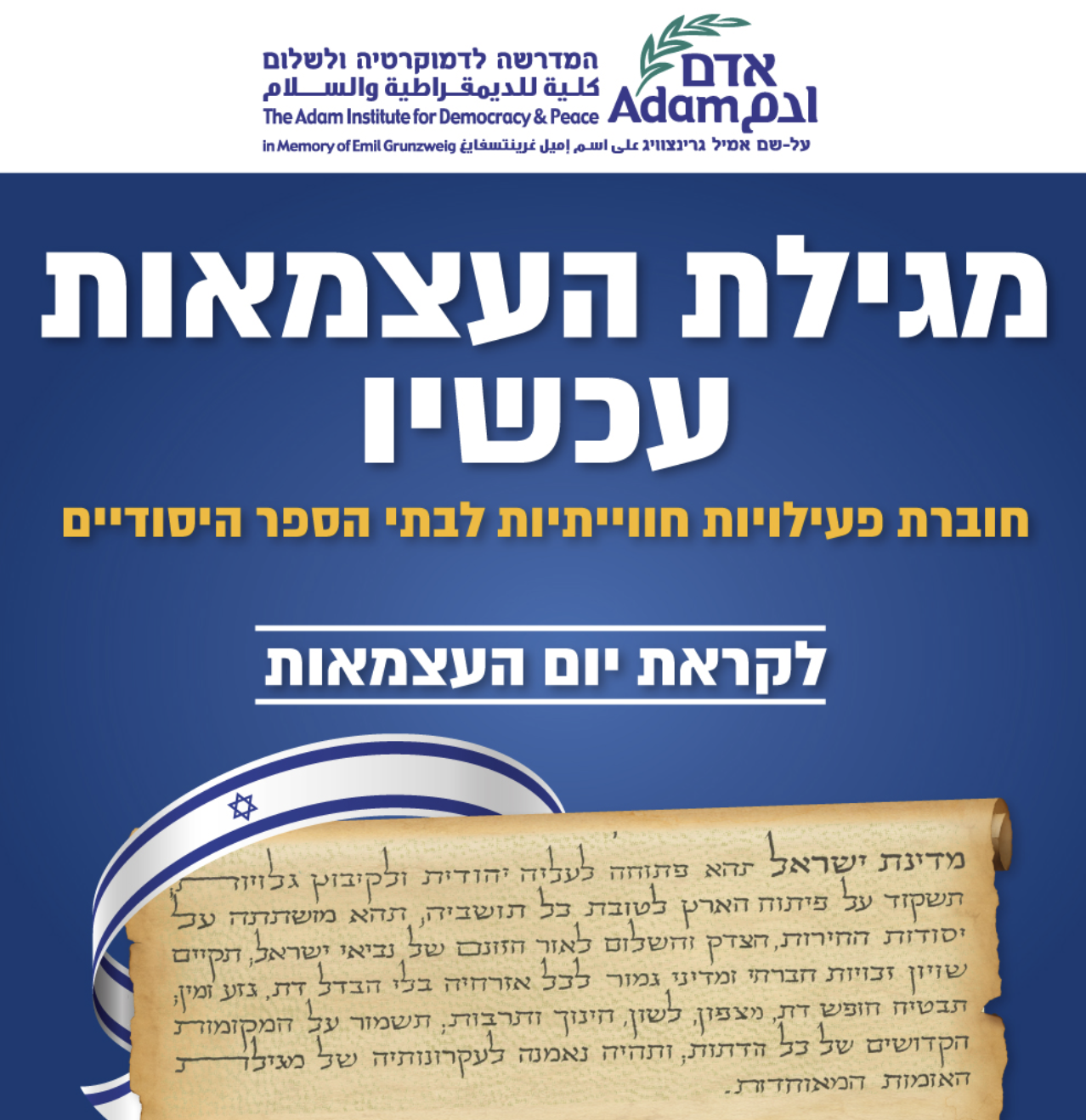
Students are introduced to Israel’s Declaration of Independence and its historical context, focusing on the democratic principles it espouses. Students explore the state’s foundations in freedom, justice, and peace and commitment to full social and political equality for all citizens, regardless of religion, race, or gender.
The program underscores the importance of protecting freedom of religion, conscience, language, education, and culture, safeguarding holy sites of all faiths, and the commitment to uphold the principles of the United Nations Charter.
Through age-appropriate activities and discussions, students connect these values to their daily lives—within the classroom, the school community, and the broader society—especially in the context of Independence Day.